
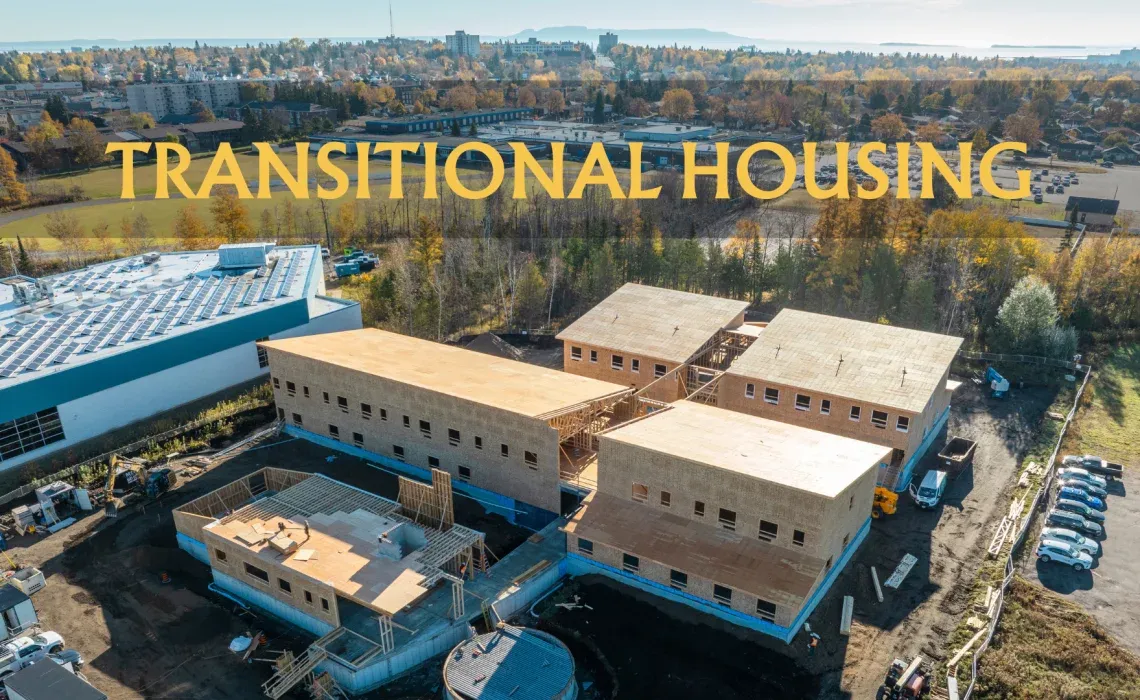
Thunder Bay is fundamentally changing how it addresses the housing crisis. For years, the city has acted as the default safety net for Northwestern Ontario, heavily relying on temporary emergency shelters that do little to break the cycle of homelessness.
Now, a massive new initiative is shifting the focus from temporary containment to permanent healing. The Indigenous Youth Transitional Housing Project (IYTHP), currently nearing completion on Junot Avenue South, represents a critical turning point in how Thunder Bay supports its most vulnerable youth.
Here is why this development is a massive win for the entire community.
What is the IYTHP?
Backed by an $8.7 million investment from the provincial Indigenous Supportive Housing Program (ISHP), the IYTHP is a 58-unit, three-story transitional housing facility.
Instead of targeting the general adult population, the facility specifically serves Indigenous youth and young adults aged 18 to 29 who are experiencing homelessness, at risk of homelessness, or struggling with mental health and addictions.
The project is the result of a historic collaboration between four major Indigenous organizations:
- Ontario Aboriginal Housing Services (OAHS)
- Thunder Bay Indigenous Friendship Centre (TBIFC)
- Métis Nation of Ontario (MNO)
- Ontario Native Women's Association (ONWA)
A "Culture-First" Housing Model
The Junot Avenue project abandons the traditional, high-barrier shelter model in favor of trauma-informed, culturally grounded care. It recognizes that giving a young person a room is useless if they lack the life skills and mental health support to keep it.
- Wrap-Around Support: The facility operates 24/7 with dedicated youth workers and full-time case managers. It isn't just a place to sleep; it is an active navigation hub where residents get direct help obtaining identification, completing housing applications, and connecting with mental health resources.
- Holistic Healing: Rooted in the Seven Grandfather Teachings, the facility embeds cultural practices directly into daily life. Residents will have access to Elders, traditional healing practices, and a communal teaching kitchen to develop life skills like cooking and food security.
- A Stepping Stone: The building includes both single and pod-style accommodations. The goal is to provide intense support initially, allowing youth to transition into more independent living arrangements on the upper floors as they build self-reliance, pursue education, or find employment.
Why This Benefits the Entire City
The economic and social implications of the IYTHP extend far beyond the walls of the building itself.
1. Intercepting the Pipeline: By targeting youth aged 18 to 29, the facility interrupts the cycle of chronic homelessness before it solidifies. Preventing a 20-year-old from spending the next decade on the streets drastically reduces future strain on the city’s emergency rooms, paramedics, and police services.
2. Offloading Municipal Burden: Thunder Bay municipal taxpayers are heavily burdened by the regional homelessness crisis. Because the IYTHP is driven by Indigenous organizations and funded by provincial dollars, it shifts the operational and financial burden of managing this vulnerable population away from city-funded emergency services.
3. Sustainable Infrastructure: Designed by FormStudio Architects and built by Renokrew, the facility utilizes mass timber and sustainable materials. It is an investment in modern, green infrastructure that revitalizes a city-owned parcel of land while respecting environmental values.
Looking Forward
Slated for completion in late 2026, the Indigenous Youth Transitional Housing Project is exactly the kind of targeted, high-support infrastructure Thunder Bay needs. It proves that when communities, provincial funders, and Indigenous leadership collaborate, they can build solutions that don't just manage homelessness—they actually solve it.
Sources
- Government of Ontario (Newsroom): Ontario Providing Supportive Housing for Young People in Thunder Bay. Details the $8.7 million investment through the Indigenous Supportive Housing Program (ISHP).
- Ontario Aboriginal Housing Services (OAHS) & Thunder Bay Indigenous Friendship Centre (TBIFC): Project outlines detailing the 58-unit structure, the 18–29 age demographic, and the "culture-first" holistic support model.
- TBNewsWatch: Junot Ave transitional home slated for October opening (May 2026). Provided the updated construction timeline, details on the two-stage housing model, and the involvement of the Métis Nation of Ontario (MNO) and Ontario Native Women's Association (ONWA).
- City of Thunder Bay / Project Partners: Architectural and construction details noting the use of FormStudio Architects and Renokrew.
- Journal of the American Medical Association (JAMA): Health Care and Public Service Use and Costs Before and After Provision of Housing for Chronically Homeless Persons With Severe Alcohol Problems (2009). The foundational peer-reviewed study on Seattle's 1811 Eastlake facility, detailing the $4 million taxpayer savings and the 35% reduction in alcohol use.
- Superior Sentinel: Fast-Tracking the 'Ozempic' of Alcoholism. Details the emerging gene therapy (GDNF) research originally published in Nature Medicine (2023) regarding resetting dopamine pathways in severe alcoholism.
- Thunder Bay District Social Services Administration Board (TBDSSAB): The October 2024 Point-in-Time (PiT) Count. Provided the official data that at least 557 individuals were experiencing homelessness on a given night in Thunder Bay.